Is Silicone Microwave Safe? The Science, Safety Standards, and Factory Secrets (2026 Guide)
As a professional silicone manufacturer at TNSilicone, we receive this question daily: “Can I safely put silicone molds or containers in the microwave?”
With the global shift toward BPA-free kitchenware, silicone has become the top alternative to plastic. But is it truly safe under high heat? The short answer is yes, but there are critical factory secrets you need to know.
The Molecular Science: How Silicone Reacts to Microwaves
Unlike plastic, food-grade silicone is a stable polymer. Its backbone consists of Silicon-Oxygen (Si-O) bonds, which have a much higher bond energy than the Carbon-Carbon (C-C) bonds found in plastics. This structure provides two main safety benefits:
- Non-Polar Nature: Microwaves heat food by vibrating polar molecules (like water). Since pure silicone is non-polar, the waves pass through without heating the material itself.
- Extreme Heat Resistance: Most high-quality silicone (like our TN-7X0M series) can withstand temperatures from -40°C to 230°C (446°F) without melting or warping.
Silicone vs. Plastic: Microwave Safety Comparison
| Feature | Food-Grade Silicone | Standard Plastic (PP) |
|---|---|---|
| Max Temperature | 230°C (446°F) | ~120°C (248°F) |
| BPA/Phthalates | 100% Free | May contain traces |
| Chemical Leaching | None (Inert) | High risk when overheated |

Critical Safety Warning: When Silicone is NOT Microwave Safe
Not all silicone is created equal. To avoid safety risks, watch out for these Red Flags:
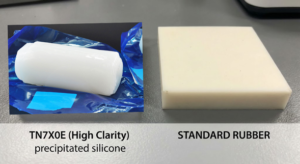
1. Hidden Fillers: Cheap silicone uses plastic fillers. Perform the “Pinch Test”: if you twist the silicone and see white streaks, it contains fillers that may release toxic fumes in the microwave.
2. Metal Reinforcements: Many silicone cake pans have internal steel frames. Never microwave these, as they will cause sparking.
3. Platinum vs. Peroxide Cure: At TNSilicone, we use Platinum-Cure technology. Peroxide-cured silicone is cheaper but can leave a chemical odor when heated.
Frequently Asked Questions (FAQ)
Q1: Can I use silicone stretch lids in the microwave?
Yes, silicone lids are much safer than plastic wrap, which can melt into your food. Just ensure there is a small gap for steam to escape.
Q2: Does silicone leach chemicals during heating?
Pure, food-grade silicone is chemically inert. It does not react with food or release BPA, making it the safest choice for microwave cooking.
Q3: How can I tell if my silicone is FDA or LFGB approved?
Check the bottom of the product for the “fork and glass” symbol (LFGB) or the microwave-safe icon (three wavy lines). LFGB is the stricter European standard we often recommend.
Final Verdict
Is silicone microwave safe? Absolutely, provided you choose 100% platinum-cured, food-grade silicone without hidden fillers. It is a durable, healthy, and eco-friendly choice for any modern kitchen.
Need Certified Microwave-Safe Silicone Solutions?
As a leading factory, TNSilicone provides high-quality raw materials and custom molds for global brands.