In the competitive landscape of B2B silicone manufacturing, Platinum Cure Silicone (Addition Cure) has evolved from a premium specialty material to an industry standard for high-performance applications. For procurement managers and engineers in the medical, automotive, and food-grade sectors, the shift towards No Post Cure Silicone represents more than just a material choice—it is a strategic move to optimize OEE (Overall Equipment Effectiveness) and ensure uncompromising regulatory compliance.
In This Technical Guide:
- The Chemistry of Addition Cure (Platinum) vs. Peroxide Systems
- Why “No Post Cure” is Transforming High-Volume Production
- Comparative Analysis: Mechanical Stability & Volatile Content
- Critical Applications: From Medical Devices to EV Components
1. The Science of Platinum Cure (Addition Cure) Silicone
At its core, Addition Cure Silicone involves a cross-linking reaction between functional vinyl groups and hydride groups, catalyzed by a platinum complex. Unlike condensation or peroxide systems, this reaction produces zero by-products.
Technical Advantages for Engineers:
- Linear Shrinkage: Extremely low compared to peroxide systems, ensuring high-precision dimensions.
- Cure Speed: Temperature-activated rapid cross-linking, ideal for Liquid Silicone Rubber (LSR) injection molding.
- Biocompatibility: Inherently inert, meeting USP Class VI and ISO 10993 standards.
2. Breaking Down “No Post Cure” Technology
Traditionally, post-curing (heating the finished part in an oven for 2–4 hours) was mandatory to drive off volatile organic compounds (VOCs) and stabilize the Compression Set. However, advanced No Post Cure HTV and LSR grades utilize high-purity polymers and optimized catalyst packages to achieve these properties “out of the mold.”
| Feature | Standard Platinum Cure | No Post Cure Silicone |
|---|---|---|
| Secondary Heating | Required (2-8 hours) | Eliminated |
| Volatile Content | Low (after post-cure) | < 0.5% (Directly molded) |
| Production Cycle | Longer (Multi-stage) | Shortened by 30-50% |
3. ROI Impact: Why Procurement Leaders are Switching
From a cost-analysis perspective, the higher initial material cost of No Post Cure Silicone is often offset by the drastic reduction in operational overhead:
- Energy Savings: Eliminating industrial ovens reduces electricity consumption significantly.
- Labor Optimization: No more manual loading/unloading of parts for secondary curing.
- Reduced Floor Space: Frees up square footage previously occupied by curing stations.
- Instant Compliance: Parts meet FDA and LFGB requirements immediately, accelerating time-to-market.
4. Key Applications: Precision and Purity
Medical Grade LSR
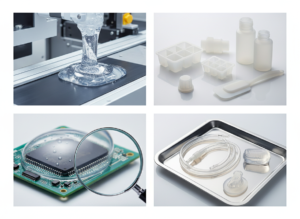
In medical tubing and respiratory masks, the absence of volatiles is non-negotiable. Our platinum cure silicone solutions ensure no leaching of harmful substances.
Automotive EV Seals
With the rise of Electric Vehicles, high-temperature resistance and low compression set in gaskets are critical. No post cure grades provide the dimensional stability needed for complex battery seals.
Technical Consultation & Inquiry
Selecting the right addition cure silicone grade depends on your specific tooling, cycle time targets, and regulatory needs. Our engineering team provides custom compounding for both HTV and LSR applications.Request Technical TDS & Quote