Specifications
Description
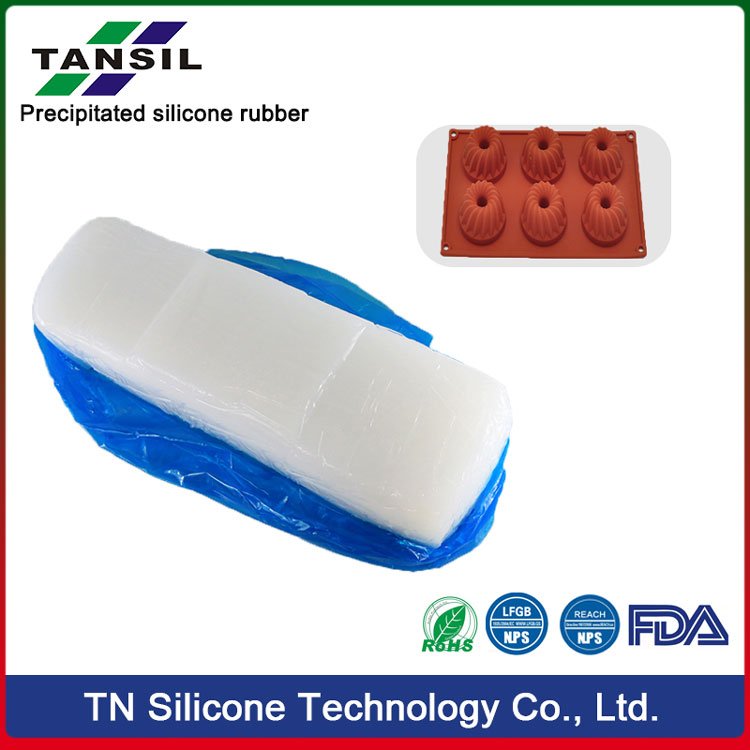
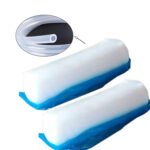
Application :Suitable for the production of cake tray, miscellaneous
products, etc.
Specifications
Characteristic :
1.Good processing performance, good stability, goodresilience, good fluidity, fast vulcanization, good moldrelease.
2.FDA, ROHS, REACH certificated.
Specification Data Sheet >>
| Item | TN-705 | TN-710 | TN-720 | TN-730 | TN-740 | TN-750 | TN-760 | TN-770 | TN-780 | TN-790 |
|---|---|---|---|---|---|---|---|---|---|---|
| Appearance | Translucent solid, no obvious mechanical impurities | |||||||||
| Density (g/cm³) | 1.03±0.03 | 1.04±0.03 | 1.06±0.03 | 1.08±0.03 | 1.12±0.03 | 1.15±0.03 | 1.19±0.03 | 1.22±0.03 | 1.24±0.03 | 1.25±0.03 |
| Hardness (Shore A) | 5±1 | 11±2 | 20±2 | 30±2 | 40±2 | 50±2 | 60±2 | 70±2 | 80±2 | 89±2 |
| Tensile Strength (MPa) ≥ | 1.0 | 3.5 | 4.0 | 6.0 | 6.5 | 7.5 | 7.5 | 7.0 | 7.0 | 6.0 |
| Elongation (%) ≥ | 300 | 800 | 750 | 650 | 550 | 450 | 400 | 280 | 150 | 50 |
| Tear Strength (kN/m) ≥ | 4 | 6 | 8 | 10 | 10 | 12 | 10 | 10 | 8 | 6 |
| Heat Shrinkage (%) | 3.8–4.4 | 3.7–4.3 | 3.7–4.3 | 3.6–4.1 | 3.3–3.9 | 3.1–3.7 | 2.9–3.5 | 2.8–3.4 | 2.7–3.3 | 2.5–3.1 |
| Plasticity | 80–120 | 110–130 | 120–150 | 135–160 | 165–195 | 200–230 | 235–255 | 290–320 | 315–345 | 295–325 |
FAQ
1. What is HTV silicone rubber?
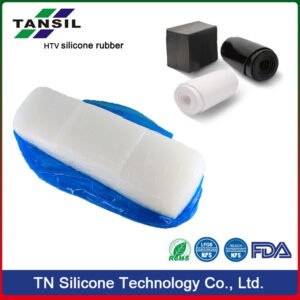
HTV (High Temperature Vulcanized) silicone rubber is a solid silicone material cured at high temperatures using peroxide or platinum catalysts. It offers excellent mechanical strength, weather resistance, heat resistance, and electrical insulation, making it suitable for industrial components, automotive parts, medical products, and consumer goods.
2. How do I choose the right Shore hardness?
The required hardness depends on your application.
| Hardness | Typical Application |
|---|---|
| 5A–20A | Soft grips, wearable products, cushioning |
| 30A–50A | General molded silicone products |
| 60A–70A | Industrial seals, gaskets |
| 80A–90A | Rollers, structural parts, wear-resistant products |
3. Is silicone rubber resistant to high temperatures?
Yes. Standard HTV silicone typically withstands continuous temperatures between -60°C and 200°C, while specially formulated grades can tolerate temperatures up to 250°C or higher for short periods.
4. Is silicone waterproof?
Yes. Silicone rubber is naturally hydrophobic and provides excellent resistance to moisture, making it ideal for outdoor products, sealing applications, and electrical insulation.
5. What industries use solid silicone rubber?
Solid silicone is widely used in:
- Automotive
- Medical devices
- Kitchenware
- Electronics
- LED lighting
- Aerospace
- Electrical insulation
- Industrial sealing
- Consumer products
6. Can silicone rubber be customized?
Absolutely. Manufacturers can customize:
- Hardness (5A–90A)
- Color
- Density
- Tensile strength
- Tear resistance
- Flame retardancy
- Food-grade formulations
- Medical-grade formulations
- Conductive silicone
- Thermally conductive silicone
7. What is the difference between HTV and LSR silicone?
| HTV Silicone | LSR Silicone |
|---|---|
| Solid rubber | Liquid rubber |
| Compression molding | Injection molding |
| Better for large industrial parts | Better for precision parts |
| Lower tooling cost | Higher automation |
8. Is silicone environmentally friendly?
Yes. Silicone is considered an environmentally friendly elastomer because it is chemically stable, non-toxic, odorless, and has a long service life. Many grades comply with FDA, LFGB, and RoHS requirements.
9. Can silicone rubber contact food?
Food-grade silicone manufactured with compliant raw materials can meet FDA or LFGB requirements and is commonly used for baking molds, baby products, kitchen utensils, and food processing equipment. Compliance should be verified with the supplier's certification for the specific grade.
10. What factors affect the mechanical properties of silicone rubber?
Several factors influence performance, including:
- Shore hardness
- Filler content
- Curing system
- Processing conditions
- Temperature
- Additives
- Pigments
Selecting the appropriate formulation ensures the best balance between tensile strength, elongation, tear resistance, and durability.
11. What information should I provide when requesting a silicone material?
Providing the following information helps manufacturers recommend the most suitable grade:
- Required hardness (Shore A)
- Product application
- Operating temperature
- Color requirement
- Food-grade or medical-grade certification
- Flame retardancy requirement
- Thermal conductivity requirement
- Conductivity requirement
- Production process (compression, extrusion, injection)
12. Why choose TNSilicone?
TNSilicone provides customized silicone material solutions for customers worldwide, including:
- Hardness from 5A to 90A
- Stable physical properties
- Excellent tear resistance
- Custom colors
- Food-grade and industrial-grade options
- Fast sampling
- OEM & ODM support
- Global export experience